
Middle East Tensions and Oil: What Investors Need to Know
Middle East Conflict, Oil Prices, and What It Means for Investors
Murat Sensoy, CFA - Investment Analyst
Recent developments in the Middle East involving Iran and several neighboring countries have understandably raised increased concerns among investors. When we see headlines about the Strait of Hormuz or oil prices surging past $100 per barrel, it is natural to feel a sense of unease.
While geopolitical conflicts can create short-term uncertainty, it is important to separate immediate market reactions from longer-term investment outcomes. We suggest you to revisit last month’s blog piece highlighting the importance of having a long-term and diversified investment strategy: Investing In Uncertain Times
What’s Happening Now
The current conflict has had its most direct impact on oil and energy markets, which are highly sensitive to disruptions in supply. Key shipping routes, such as the Strait of Hormuz, are critical to global oil flow as approximately 20% of the world’s oil and liquefied natural gas (LNG) passes through the Strait of Hormuz. Recent disruptions have contributed to what some analysts describe as one of the largest oil supply shocks in history.
As a result:
Oil prices have risen sharply at times, even exceeding $100 per barrel.
Prices have also been highly volatile, swinging quickly based on headlines and expectations for the conflict.
This volatility has broader economic implications:
Higher oil prices can increase inflation (fuel, transportation, goods)
Consumers may reduce spending
Central banks may delay interest rate cuts
How Markets Have Responded
Financial markets have reacted in a typical pattern seen during geopolitical shocks:
Short-term effects:
Stock markets have experienced periods of decline and volatility
Energy and defense sectors have performed strongly
“Safe haven” assets like gold have risen
For example:
The S&P 500 has seen pullbacks during escalations
Energy stocks have surged as oil prices increased
However, markets have also shown an ability to rebound quickly:
On signs of de-escalation, stocks have rallied and oil prices have fallen sharply
Why Oil Matters So Much
Oil is the main transmission mechanism between geopolitical conflict and financial markets.
When oil prices rise:
Businesses face higher costs
Consumers have less disposable income
Economic growth can slow
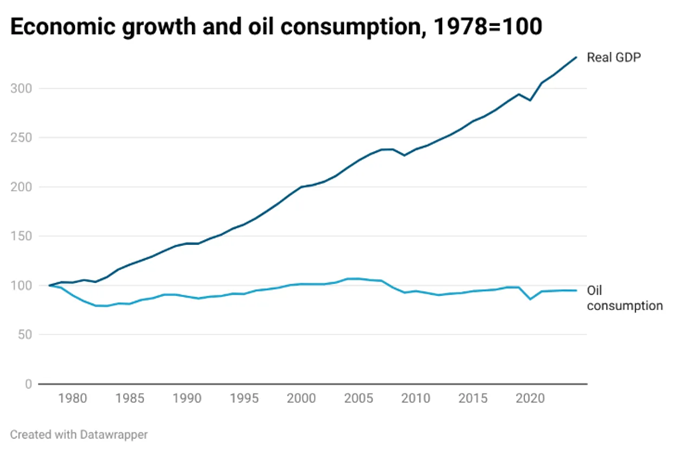
That said, today’s global economy is less oil-dependent than in past decades, which helps cushion the long-term impact.
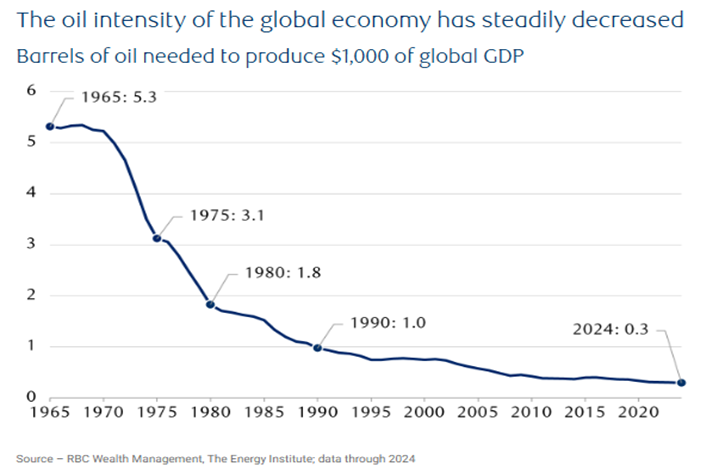
source: https://paulkrugman.substack.com/p/war-oil-and-the-world-economy
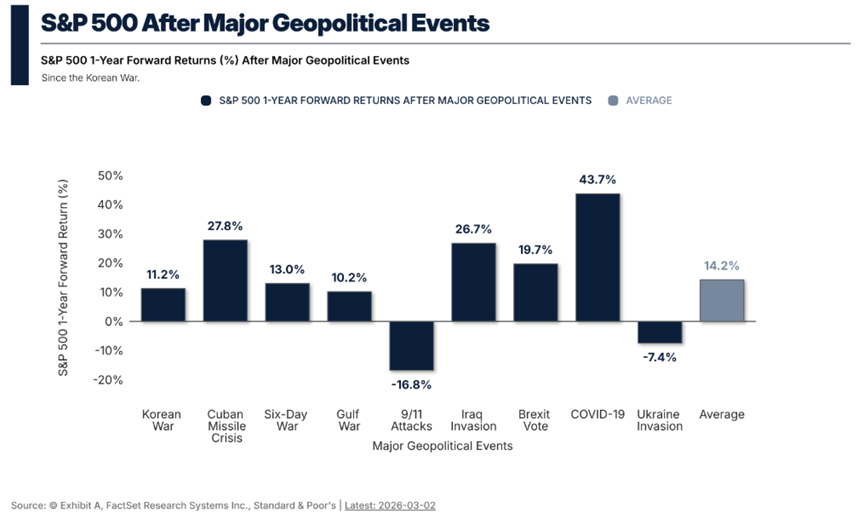
A Look at History: Markets and Geopolitical Crises
While every conflict is different, history provides helpful perspective.
Across past events—including:
Middle East wars
The Gulf War
The Iraq War
Other geopolitical crises
Markets have tended to follow a similar pattern:
Initial decline driven by uncertainty
Stabilization as information improves
Recovery and growth over time
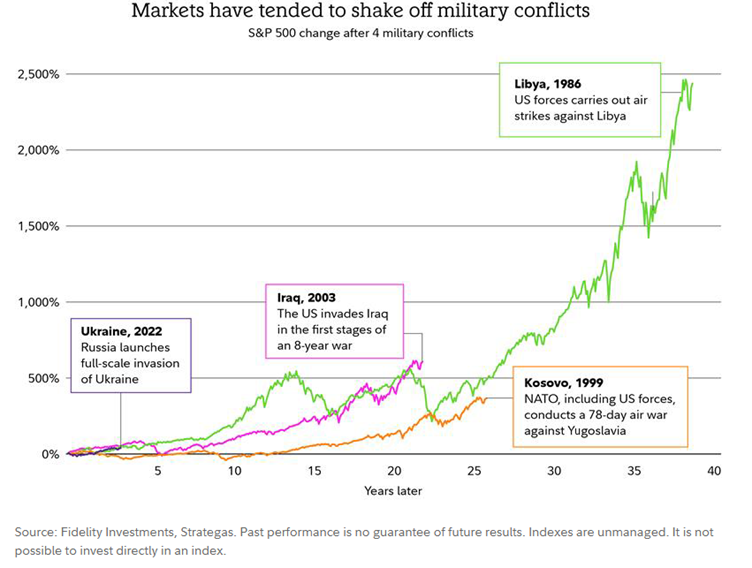
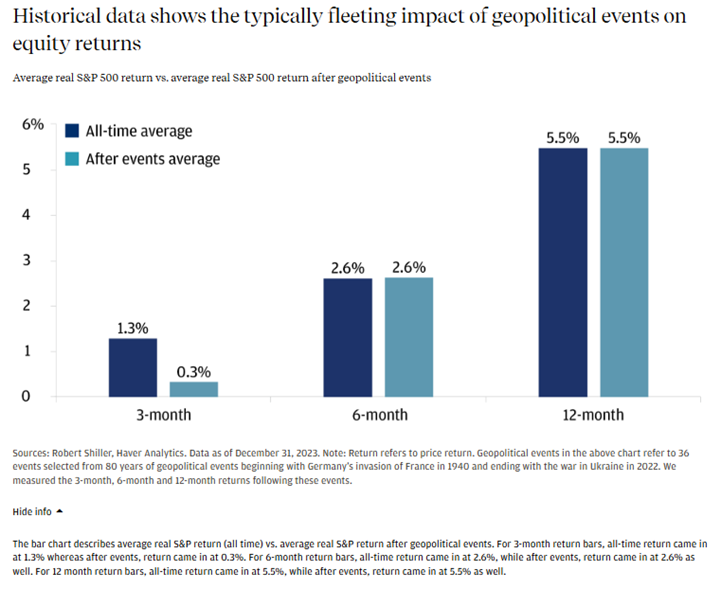
Research shows that geopolitical crises have not typically led to lasting market declines, and long-term investors have historically been rewarded for staying invested.
In fact:
Markets often begin recovering before conflicts formally end
Investor sentiment tends to overshoot on the downside during periods of fear
While the current environment feels unique, this pattern has repeated across many past conflicts.
What This Means for Long-Term Investors
For long-term investors—the key takeaway is this:
Short-term volatility is normal. Long-term discipline is what matters.
While headlines can be unsettling:
Market declines during geopolitical events are typically temporary
Corporate earnings and economic fundamentals tend to drive long-term returns
Periods of uncertainty can create opportunities for future gains
Some strategists even note that periods of elevated fear and volatility have historically marked attractive entry points for investors.
Bottom Line
Geopolitical conflicts can create uncertainty and short-term market swings, particularly through their impact on oil prices. However, history consistently shows that:
Markets are resilient
Recoveries often begin sooner than expected
Long-term investors are best served by staying disciplined
S&P 500 – A capitalization-weighted index of 500 stocks designed to measure performance of the broad domestic economy through changes in the aggregate market value of 500 stocks representing all major industries.
The views stated in this blog are not necessarily the opinion of Cetera Wealth Services, LLC and should not be construed directly or indirectly as an offer to buy or sell any securities mentioned herein. Due to volatility within the markets mentioned, opinions are subject to change without notice. Information is based on sources believed to be reliable; however, their accuracy or completeness cannot be guaranteed. Past performance does not guarantee future results.