
Investing In Uncertain Times
Investing in Uncertain Times
Periods of geopolitical tension and global conflict can create increased uncertainty for investors. News headlines can move markets quickly, and it’s natural to feel uneasy when volatility increases. And it’s also easy to think that current events are unprecedented. You might find yourself wondering, “Should I be doing something different right now?”
History provides an important reminder: uncertainty has always been part of investing. While markets may react in the short term, long-term investors have often been rewarded for maintaining discipline and staying focused on fundamentals.
In times like the current one, it’s helpful to revisit a few core investment principles and remind ourselves of the historical perspectives.
Markets and Geopolitical Events: A Historical Perspective
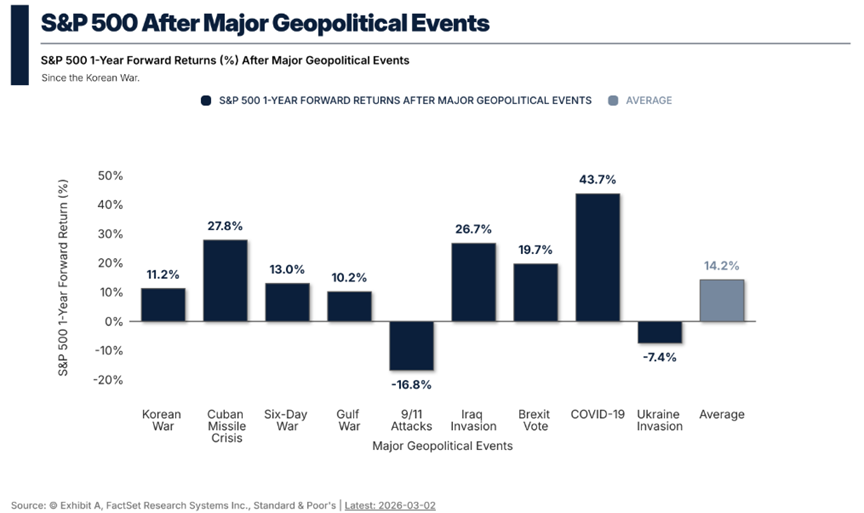
The markets have navigated many "unprecedented" moments over the last century. Geopolitical crises are distressing, but historically, their impact on the stock market is often short-lived.
Major wars and crises have shaken investor confidence in the past, but markets have shown remarkable resilience. For example, during the Gulf War in the early 1990s and the Iraq conflict in the early 2000s, markets dropped but bounced back as stability returned. Even recent events—like the COVID-19 pandemic and ongoing geopolitical tensions in the Middle East and Ukraine—were followed by recoveries for patient investors.
The "Bounce Back" Effect: On average, the S&P 500 has often produced double-digit returns in the 12 months following peaks in geopolitical risk.
Resilience: Even during major events like WWII or the Cuban Missile Crisis, markets typically bottom out quickly—often within weeks—and begin a steady recovery.
The Importance of a Long-Term Perspective
Periods of uncertainty can tempt investors to make large, emotional changes to their investment portfolios. But historically, the biggest investment mistakes often come from reacting to short-term events rather than following a disciplined plan.
A well-constructed long-term investment strategy accounts for volatility and uncertainty. Markets have navigated wars, recessions, inflation cycles, and political changes—and yet long-term investors have continued to build wealth over time.
Why Fundamentals Still Matter
Even during geopolitical tensions, the most important drivers of long-term market performance remain the same:
Corporate earnings growth
Innovation and productivity
Economic expansion
Interest rates and inflation
For long-term investors, focusing on these fundamentals is far more important than reacting to short-term market noise.
Your Best Defense: Diversification
No one can predict the future with certainty including which asset class will outperform. That’s why diversification—owning a mix of stocks, bonds, and other (alternative) investments—is crucial. A diversified, well-allocated portfolio helps manage risk, especially during turbulent times.
Asset Allocation: By spreading investments across different types of assets (stocks, bonds, real estate), we reduce the risk that a single event will derail your entire plan.
Global Reach: Diversifying across different countries and industries ensures that your wealth isn't tied to the fate of just one region.
By spreading your investments across different sectors, countries, and asset classes, we ensure that a hit to one area doesn't ruin your entire plan.
As a reminder, diversification does not eliminate market risk, but it helps ensure that no single event, sector, or region determines the outcome of your long-term plan.
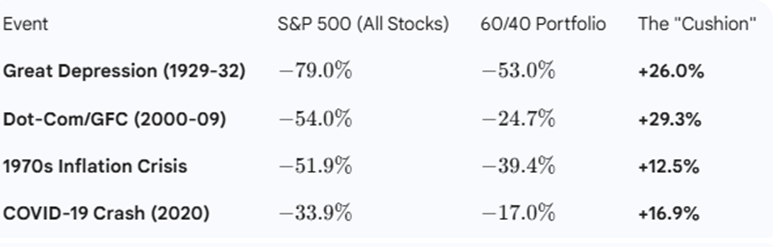
Asset allocation: the specific mix of stocks, bonds, alternatives and cash—is the most powerful tool we have to manage and reduce risk.
In fact, we believe the true value of a balanced portfolio is seen during the major crises. In almost every major 100-year disaster, for example, the 40% bond allocation historically reduced portfolio drawdowns significantly compared to an all-equity portfolio.
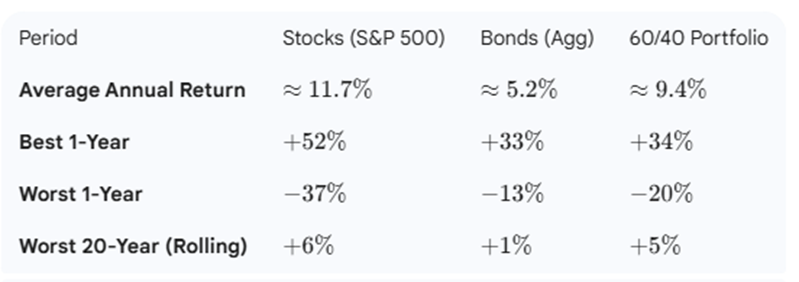
And here is another chart depicting the importance of asset allocation among different asset classes.
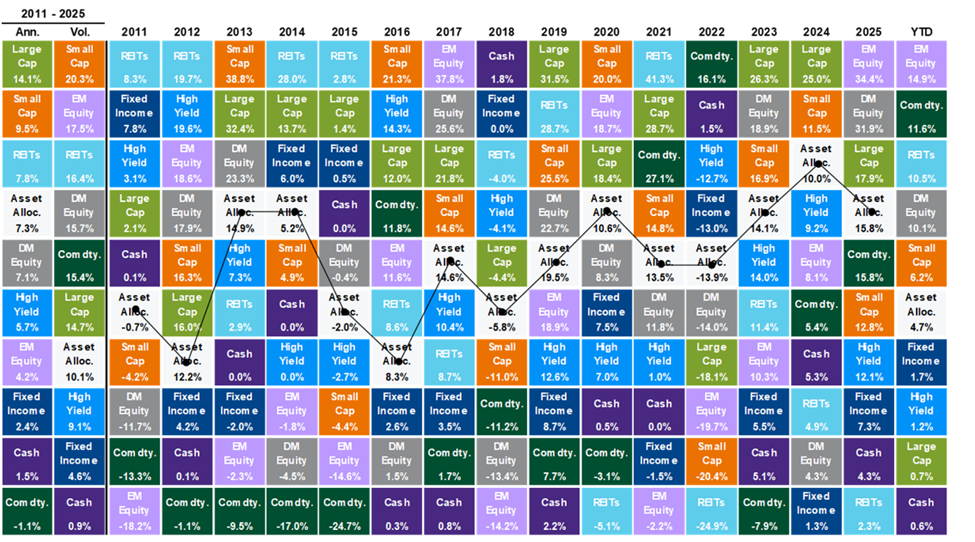
Staying Disciplined While Staying Informed
Importantly, maintaining a long-term perspective does not mean ignoring what is happening in the world.
But there is a difference between being informed and overreacting.
Successful long-term investing often requires balancing both:
Staying aware of developments
Avoiding emotional decisions that disrupt a long-term plan
Final Thoughts
Periods of uncertainty can be uncomfortable, but they are also a normal part of investing.
It is okay to be concerned, and it is okay to watch the news. But your investment strategy was designed for all seasons—the sunny ones and the stormy ones.
The biggest threat to a long-term financial plan isn't a market drop; it's an emotional reaction.
The Trap: Selling your investments during a crisis "locks in" your losses.
The Result: Investors often miss the recovery, which historically occurs sooner than most expect.
Periods of volatility can also create opportunities to rebalance portfolios—systematically bringing allocations back to their intended targets.
History shows that markets have consistently navigated wars, crises, and global disruptions.
For long-term investors, the most effective strategy is often the simplest:
Stay focused on long-term goals
Maintain diversification by asset class
Focus on the fundamentals for companies and economies
Avoid reacting emotionally to short-term events
Uncertain times require patience (we recognize it’s easier said than done), discipline, and trust in your long-term plan.
Periods like these are exactly why disciplined investment strategies and thoughtful portfolio construction matter.
We are here to help you navigate these challenges and keep your financial future on track.
1st table source: Morningstar (The 60/40 Portfolio: A 150-Year Markets Stress Test
https://www.morningstar.com/economy/6040-portfolio-150-year-markets-stress-test
2nd table source: JP Morgan Asset Management (Guide to the Markets)
Asset allocation is an investment strategy that will not guarantee a profit or protect you from loss. A diversified portfolio does not assure a profit or protect against loss in a declining market. S&P 500 – A capitalization-weighted index of 500 stocks designed to measure performance of the broad domestic economy through changes in the aggregate market value of 500 stocks representing all major industries.
The views stated in this letter are not necessarily the opinion of Cetera Wealth Services, LLC and should not be construed directly or indirectly as an offer to buy or sell any securities mentioned herein. Due to volatility within the markets mentioned, opinions are subject to change without notice. Information is based on sources believed to be reliable; however, their accuracy or completeness cannot be guaranteed. Past performance does not guarantee future results.